data platforms
Databricks Lakehouse Knowledge Graph
Timbr embeds a semantic layer into the Databricks Lakehouse, transforming raw data into a governed knowledge graph. It enables declarative semantic modeling in notebooks, enhancing discovery and reuse across Delta Lake, Unity Catalog, and AI workflows.
Semantic Modeling in SQL
Transform Databricks tables into business concepts with relationships and hierarchies.
Native
Integration
Work seamlessly with Unity Catalog and Delta Lake—no data movement, no duplication.
Reusable Metrics & Logic
Define KPIs and logic once, reuse across notebooks, dashboards, and BI tools like Power BI and Tableau.
Accelerated Data Products
Deliver governed, AI-ready data products faster—with full lineage, consistency, and collaboration.
How Timbr Embeds into Databricks Lakehouse
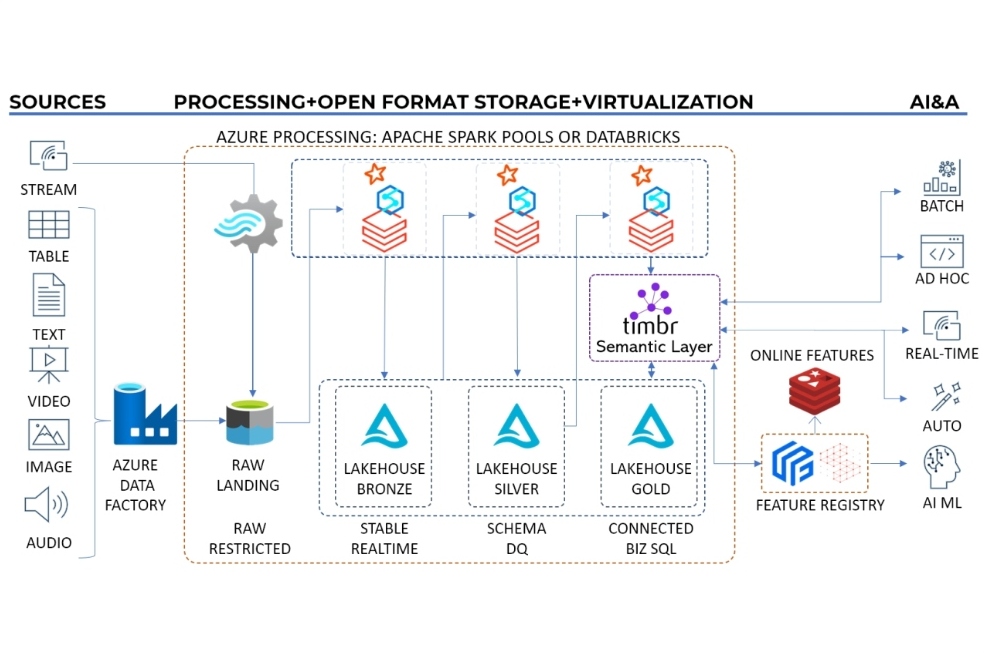
Timbr is embedded as a semantic layer within the Databricks Lakehouse, transforming data by:
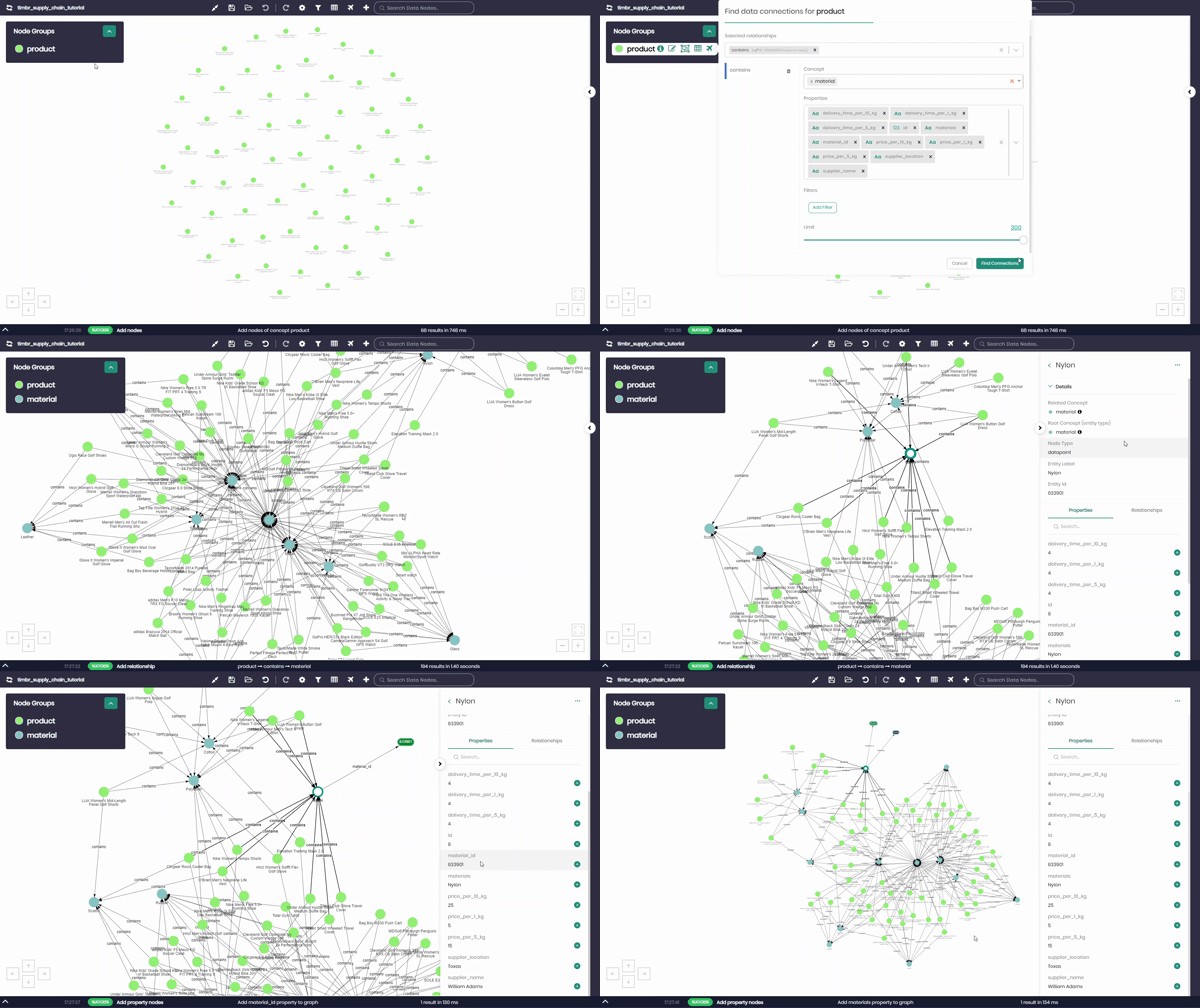
- Unified Semantic Graph: Represent Databricks data zones as a single semantic graph, making complex relationships easier to query with SQL.
- Integration with Unity Catalog: Seamlessly define and manage semantic models within Databricks workflows, leveraging Unity Catalog for centralized governance.
- Enhanced Querying: Simplify SQL queries by replacing JOINs with semantic relationships across Delta Lake and real-time data pipelines.
Features in Action
- Real-Time Processing: Combine Timbr’s semantic capabilities with Delta Live Tables for enriched real-time analytics.
- Transitive Reasoning: Automatically propagate shared properties across datasets, reducing redundancy and ensuring consistency.
- Metrics Management: Define, manage, and analyze metrics within the Lakehouse using Timbr’s Metrics Store, accessible via SQL and BI tools.
Impact
By integrating Timbr, enterprises can:
- Enable Accurate LLM Access: Enable accurate LLM access to structured data.
- Simplify Workflows: Streamline data pipelines and queries with reusable semantic relationships.
- Foster Collaboration: Align teams around shared semantic models, improving decision-making.
- Enable Scalable Analytics: Leverage Databricks’ scalability with Timbr’s semantic intelligence for advanced analytics.