data platforms
Ontology-Based Semantic Layer for Snowflake
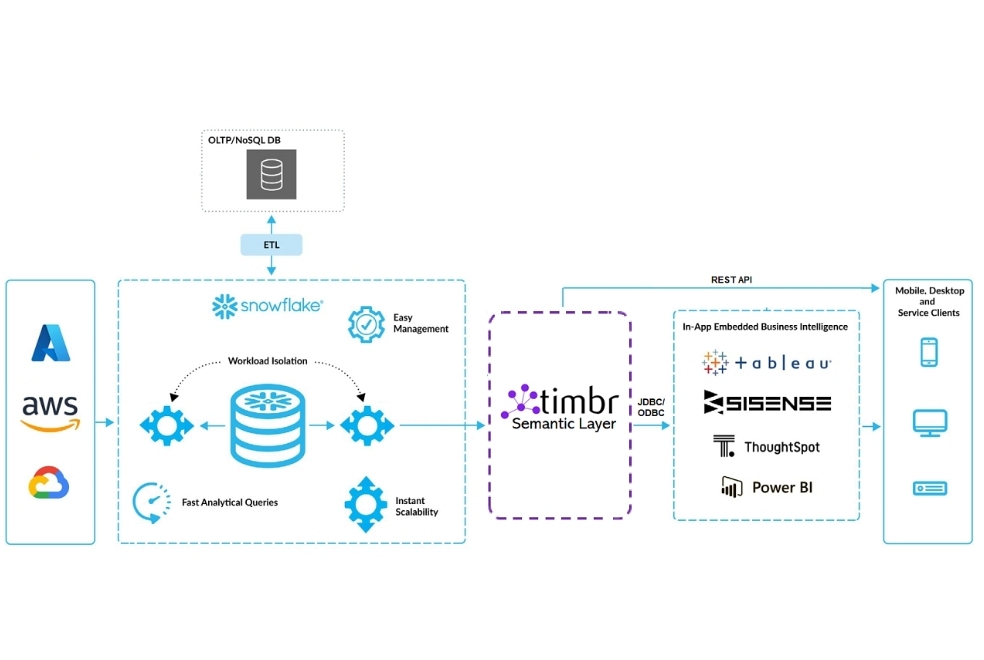
Timbr enhances Snowflake with an ontology-based semantic layer that models data as connected business concepts, relationships, metrics, and rules in SQL. This gives BI tools, NL2SQL systems, GraphRAG workflows, and AI agents governed business context over Snowflake while preserving Snowflake’s native performance, security, and integrations.
Model Data Relationships
Simplify Snowflake joins with declarative relationships embedded in your semantic layer.
Define Once, Use Everywhere
Create reusable logic and metrics across Snowflake workspaces, dashboards, and teams.
AI-Ready Structure and Access
Give AI tools governed Snowflake context for more accurate NL2SQL, GraphRAG, and agent workflows.
Clear Lineage Traceability
Track how Snowflake data is used and transformed at the semantic concept level.
How Timbr Embeds into Snowflake
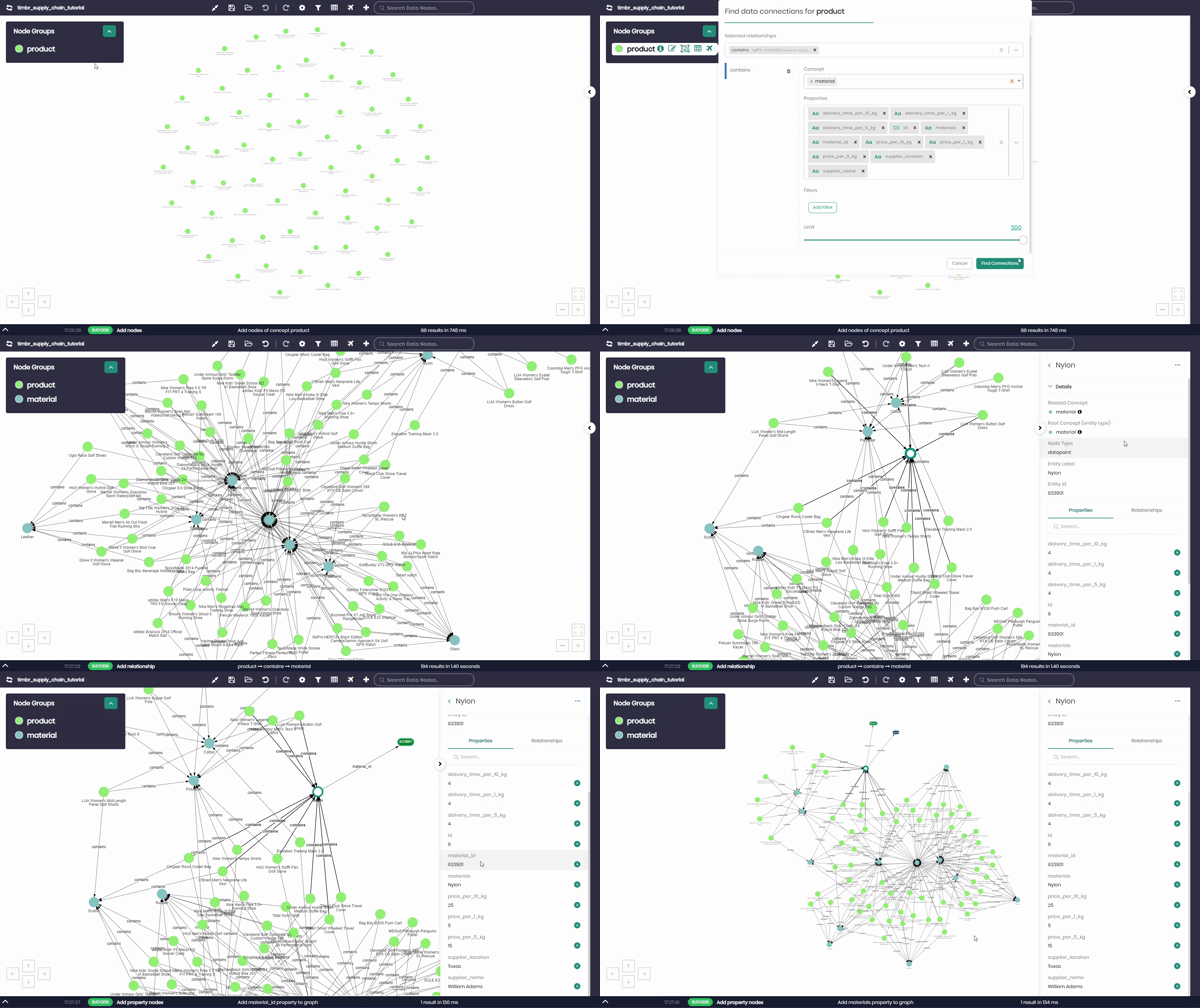
- Unified Semantic Graph: Represent Snowflake tables, views, and metrics as connected business concepts.
- Seamless BI and AI Integration: Expose governed semantic models to Tableau, Power BI, Looker, NL2SQL interfaces, GraphRAG workflows, and AI agents.
- Simplified SQL: Replace repeated joins and hardcoded business logic with reusable semantic relationships and metrics.
Features in Action
- Semantic Modeling: Define business concepts, relationships, hierarchies, and rules across Snowflake data.
- Metrics Store Integration: Standardize KPIs and reusable measures with semantic context accessible through SQL.
- Cross-Platform Consistency: Keep definitions aligned across BI dashboards, data teams, AI workflows, and connected platforms.
Impact
- Faster Insights: Simplify querying by letting teams work with business concepts instead of raw tables and joins.
- Trusted AI and Analytics: Give BI tools, NL2SQL systems, GraphRAG pipelines, and agents governed context over Snowflake data.
- Scalable Workflows: Reuse the same semantic model across teams, tools, and applications without moving data out of Snowflake.