data platforms
Modeling Semantic Data Ecosystems in AWS Cloud
Timbr adds a semantic layer to AWS, unifying Redshift, Athena, and S3 through a knowledge graph of concepts, relationships, and metrics, simplifying access, enforcing governance, and enabling reuse to accelerate analytics and power AI initiatives.
Model with Meaning
Turn Glue and Redshift data into reusable business concepts and metrics.
Hierarchies Made Simple
Model parent-child structures natively to improve exploration and reduce complex queries.
Model Data Classifications
Semantically tag S3 and Redshift datasets for domain-specific access and ML readiness.
Centralize Business Logic
Define KPIs once and consume them across AWS services and connected tools.
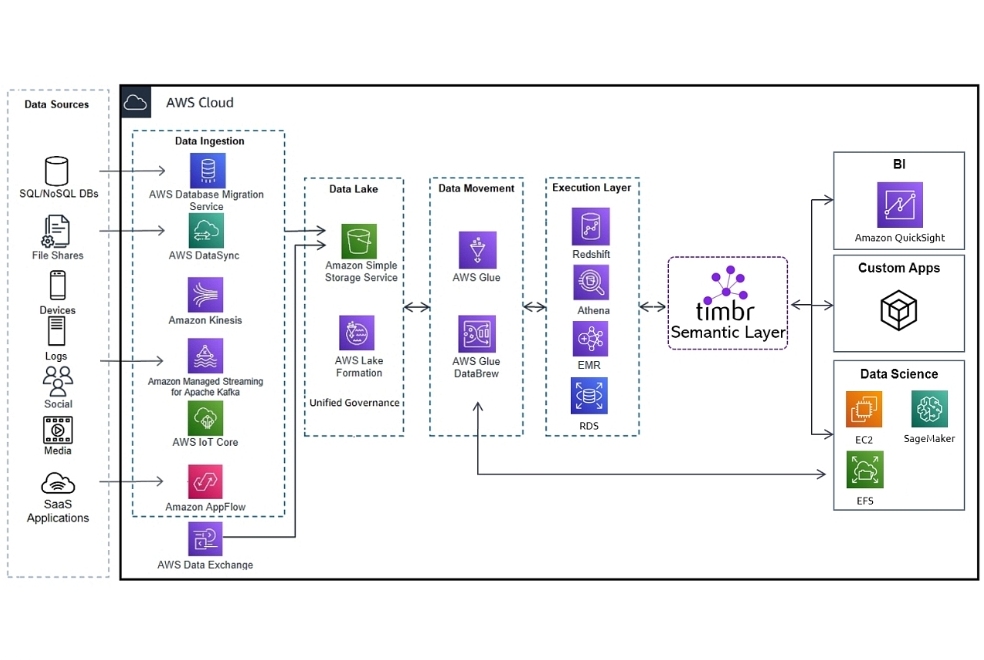
How Timbr Embeds into AWS Cloud
Timbr integrates into AWS’s data modeling layer, enhancing workflows by:
- Unified Semantic Graph: Connect AWS services like S3, Redshift, and RDS into a reusable semantic graph.
- Simplified Querying: Enable intuitive querying across diverse datasets by replacing JOINs with semantic relationships.
- BI Integration: Expose enriched semantic models to Amazon QuickSight and other BI tools.
Features in Action
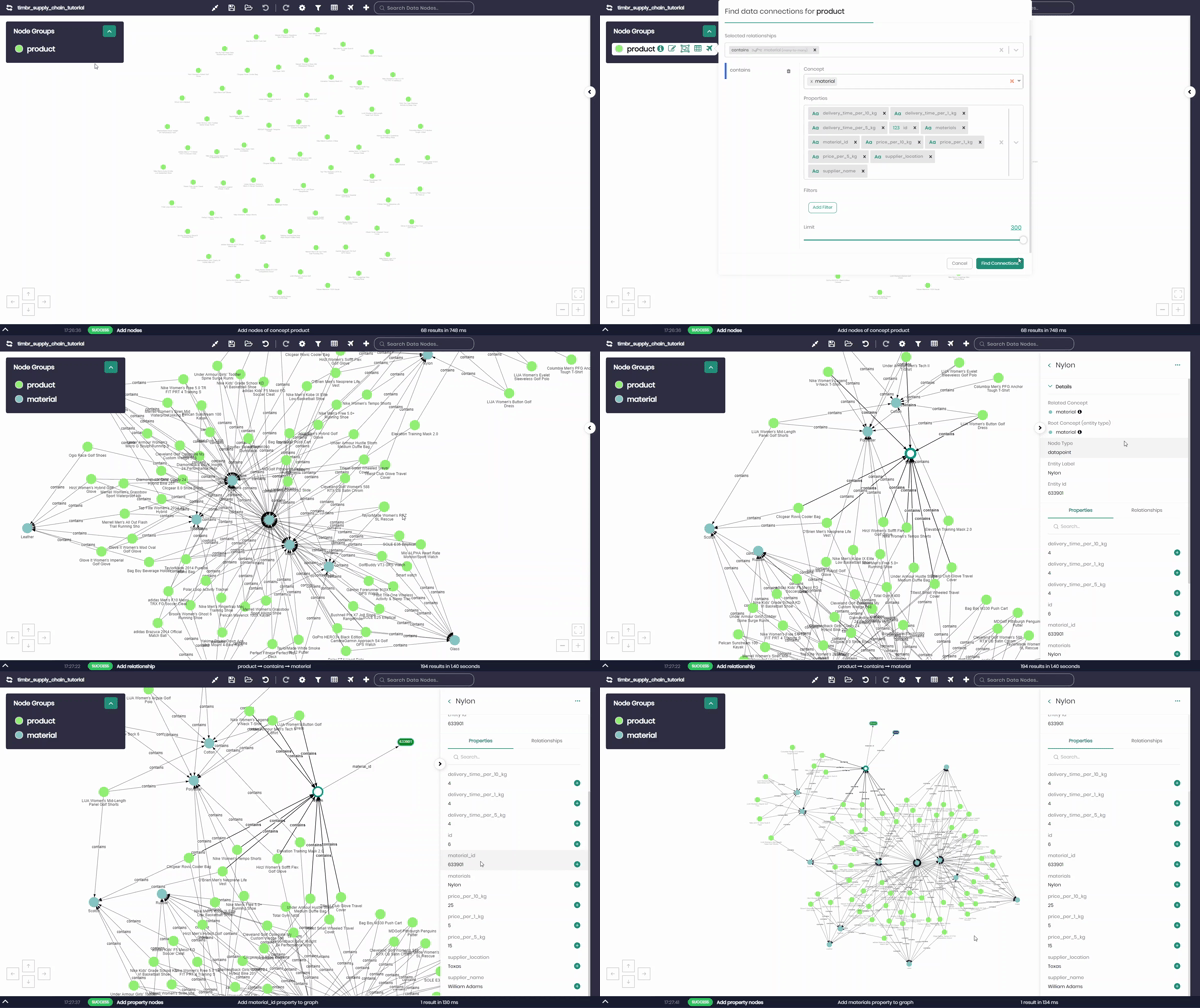
- Ontology Modeling: Build semantic relationships across AWS data for easier exploration and reuse.
- Metrics Management: Leverage Timbr’s Metrics Store to define and analyze metrics with semantic context.
- Cross-Service Collaboration: Enable seamless data exploration across AWS-native and third-party tools.
Impact
- Enable Accurate LLM Access: Enable accurate LLM access to structured data.
- Simplify Complexity: Eliminate redundant queries and workflows with semantic intelligence.
- Improve Collaboration: Share semantic models across teams for aligned decision-making.
- Scalable Analytics: Build robust analytics frameworks that grow with your business.